

# GSTR-3B Due Date for March 2026: Complete Guide, Rules & Consequences
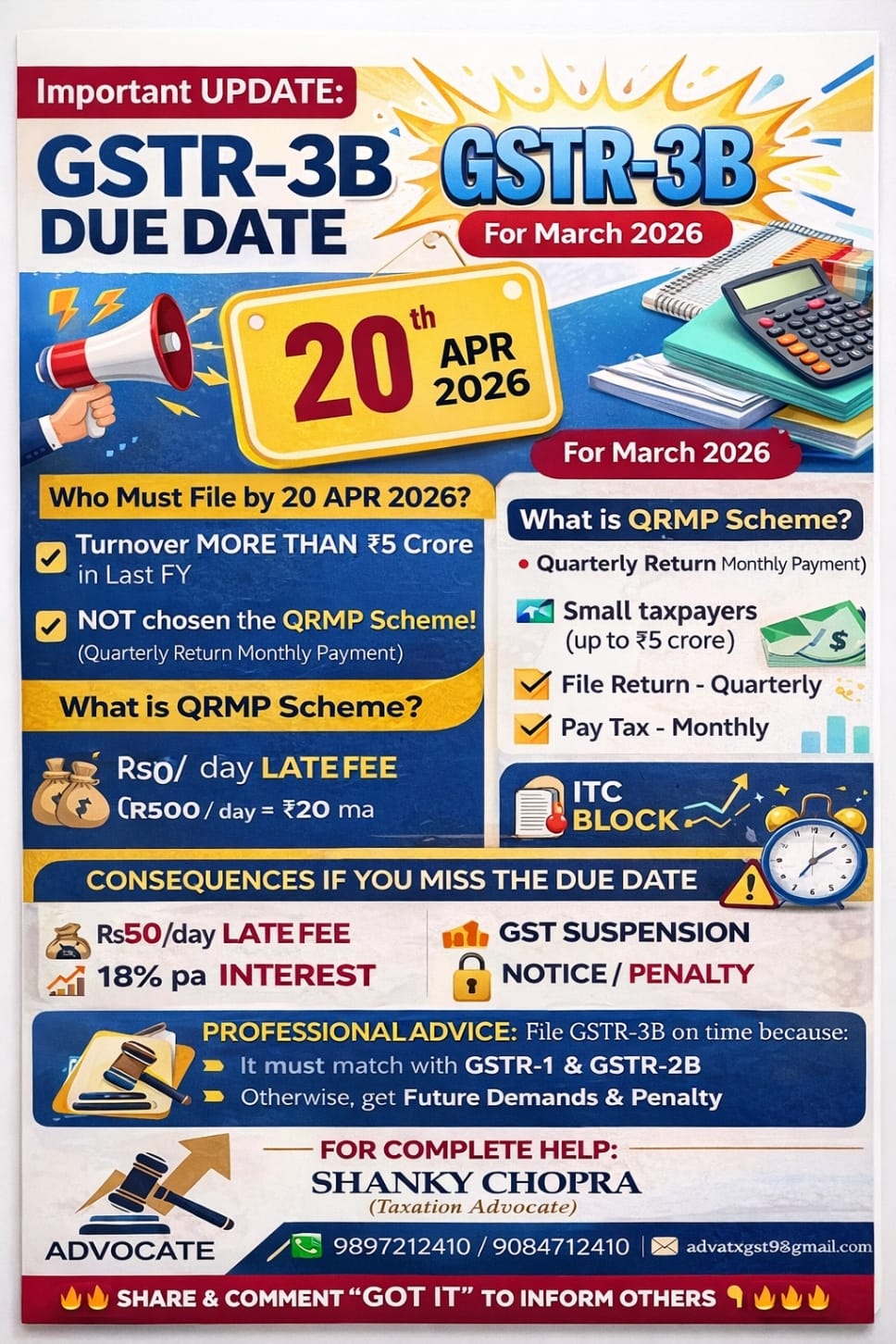
Filing your GST returns on time is crucial to avoid penalties and ensure smooth business compliance. One of the most important returns under GST is GSTR-3B, and for March 2026, the due date is 20th April 2026.
This article explains everything you need to know about GSTR-3B, who needs to file it, QRMP scheme rules, and the serious consequences of missing the due date.
# What is GSTR-3B?
GSTR-3B is a monthly summary return that every registered taxpayer must file under GST. It includes:
- Details of Outward Supplies (Sales)
- Input Tax Credit (ITC) claimed
- Net Tax Liability payable
It is a self-declared return and must be filed even if there is no business activity (NIL return).
# GSTR-3B Due Date for March 2026
# Due Date: 20th April 2026
This due date applies to:
- Taxpayers having turnover above ₹5 crore, or
- Taxpayers who have not opted for the QRMP Scheme
# Who Needs to File GSTR-3B Monthly?
You must file GSTR-3B every month if:
✅ Your aggregate turnover exceeds ₹5 crore in the previous financial year
✅ You have not opted for the QRMP (Quarterly Return Monthly Payment) scheme
✅ You are a regular taxpayer under GST
# What is the QRMP Scheme?
The QRMP Scheme (Quarterly Return Monthly Payment) is designed for small taxpayers.
Key Features:
- Applicable for taxpayers with turnover up to ₹5 crore
- Return filing: Quarterly
- Tax payment: Monthly
- Reduces compliance burden
# If you have not opted for QRMP, then monthly filing of GSTR-3B is mandatory
# Consequences of Missing GSTR-3B Due Date
Failing to file GSTR-3B on time can lead to multiple financial and legal issues:
# 1. Late Fee
- ₹50 per day (₹25 CGST + ₹25 SGST)
- ₹20 per day for NIL return
- Subject to maximum limits
# 2. Interest on Late Payment
- 18% per annum interest on outstanding tax
- Calculated from due date till payment date
# 3. ITC Restrictions
- Delay may lead to Input Tax Credit mismatch
- ITC claims may be restricted or questioned
# 4. GST Registration Suspension
- Continuous non-filing can result in
- @ Suspension or cancellation of GST registration
# 5. Notices & Penalties
- Department may issue notices like:
- GSTR-3A (Non-filing notice)
- ASMT-10 (Discrepancy notice)
- Can lead to demand orders and penalties
# 6. Negative Compliance Rating
- Poor GST compliance record
- Impacts:
- Business credibility
- Loan approvals
- Government tenders
# Professional Advice
To avoid future complications:
✔ Always file GSTR-3B on time
✔ Ensure data matches with GSTR-1 and GSTR-2B
✔ Reconcile ITC properly before filing
✔ Avoid last-day filing errors
# Conclusion
Filing GSTR-3B for March 2026 by 20th April 2026 is not just a compliance requirement but a necessity to avoid penalties, interest, and legal consequences. Staying disciplined with GST filings ensures smooth business operations and protects you from unnecessary financial burden.
# Quick Summary
# Due Date: 20 April 2026
# Late Filing = Late Fee + Interest + Notice + Registration Risk
If you need professional assistance with GST filing, compliance, or notices, feel free to connect for expert support. #

Comments (0)
Abhi tak koi comment nahi. Pehle comment karein!